The Agentic OS
for the AI native SDLC
Aiden is a purpose built Agentic OS for DevOps, Platform engineering and SRE teams covering the entire life cycle of Build, Operate, Observe and Remediate



Everything
behind the agents
Aiden OS is the layer that decides what an agent may do, what it may spend, who it acts as, and what it leaves on the record. Skills and workflows run on it. Policy, identity and evidence bound it.
.webp)
The reusable units an agent runs. Author once, version them, and every agent in every play calls the same tested step.
What each agent may touch, in which environment, at which autonomy rung — declared in version control, not configured in a console.
.webp)
Scope every agent by service, environment and change class, and put a named human on the changes you decide need one.
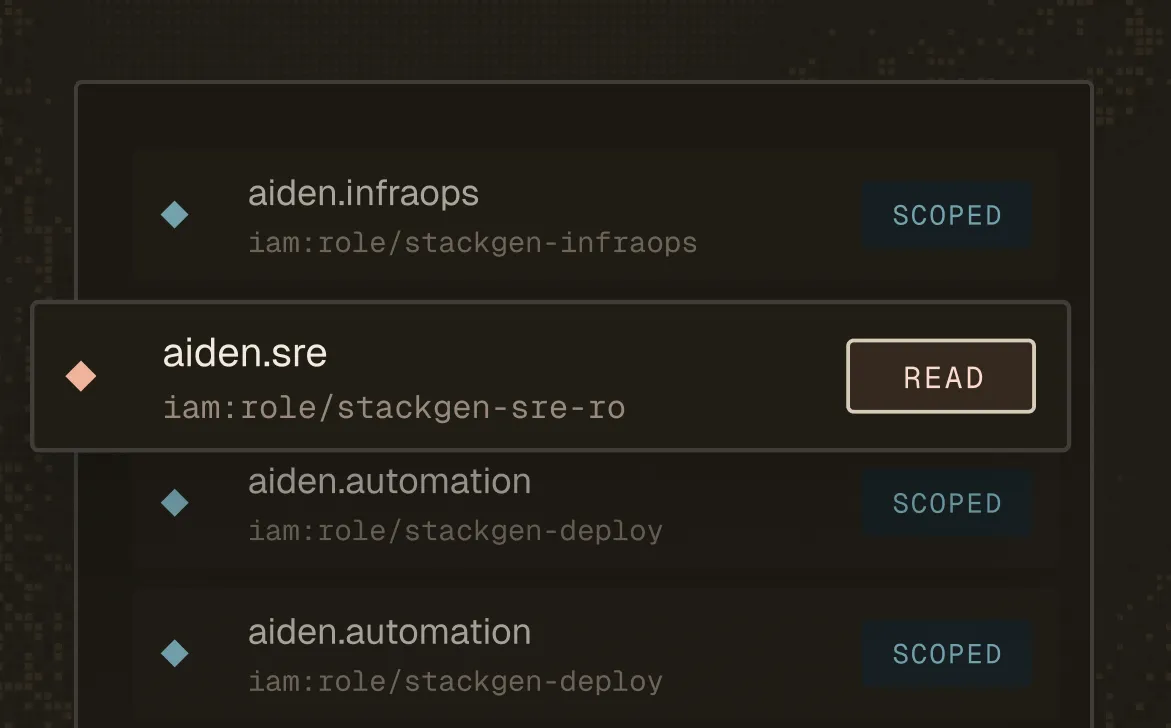
Every agent holds its own scoped credential and shows up in your logs as itself. No shared key, no borrowed human account.
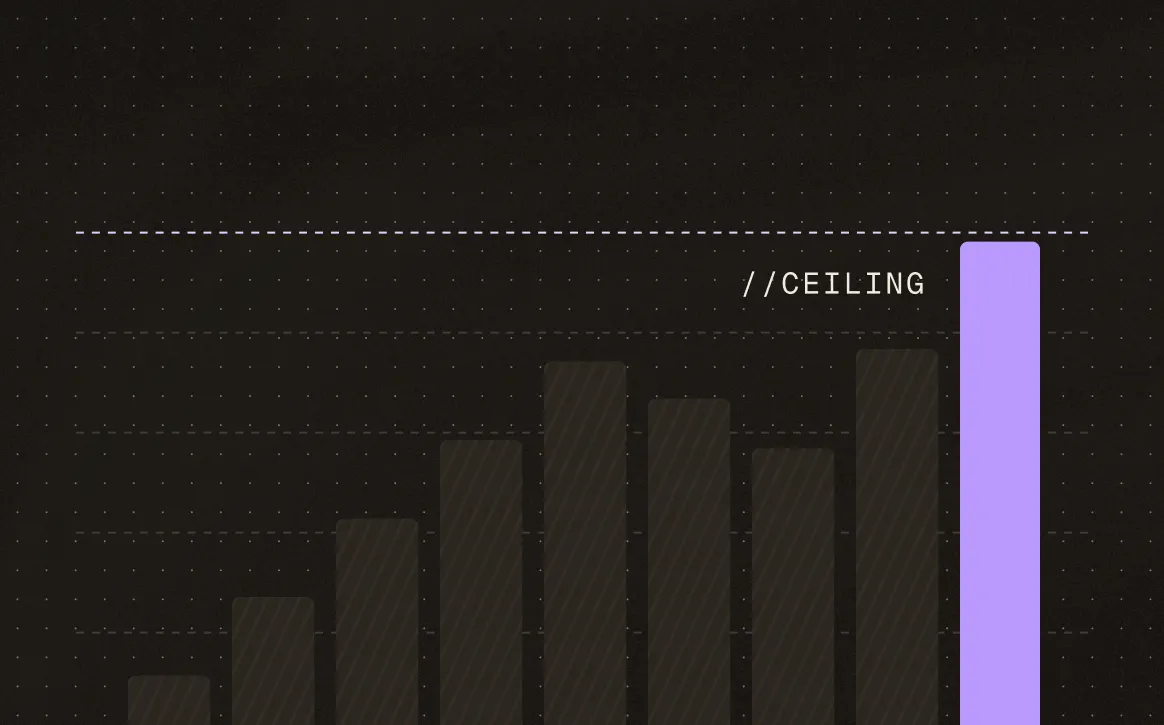
A cost ceiling per run, per agent and per team, enforced before the spend — so autonomy never turns into an unbounded invoice.
.webp)
Every decision, the objective version behind it and both agents’ positions, written to a signed record you can hand an auditor.
Your pipeline, ticketing and monitoring stay the system of execution. Agents act through them; the world model reads from them.
.webp)
Every step goes to the model that suits it, balanced across quality, speed and cost, without anyone hard-coding a model into a workflow.
Running on the tools you already have.

Humans keep authority.
The factory absorbs toil.

Sources of truth across code with infra, runtime state, and knowledge, queryable in real time.
.svg)
Governance with RBAC and policy bound every agent the same way they bound humans. Human-in-the-loop when the stakes require it.
.svg)
Decision traces for each input, each decision, and each action. Every trace is durable and replayable for audit.


.svg)
.svg)
.svg)
