





Shipyard by StackGen

Your agents need somewhere to prove the change.

Shipyard automates the lifecycle of ephemeral environments: one per pull request, destroyed on merge, and reachable by your agents through an MCP server.

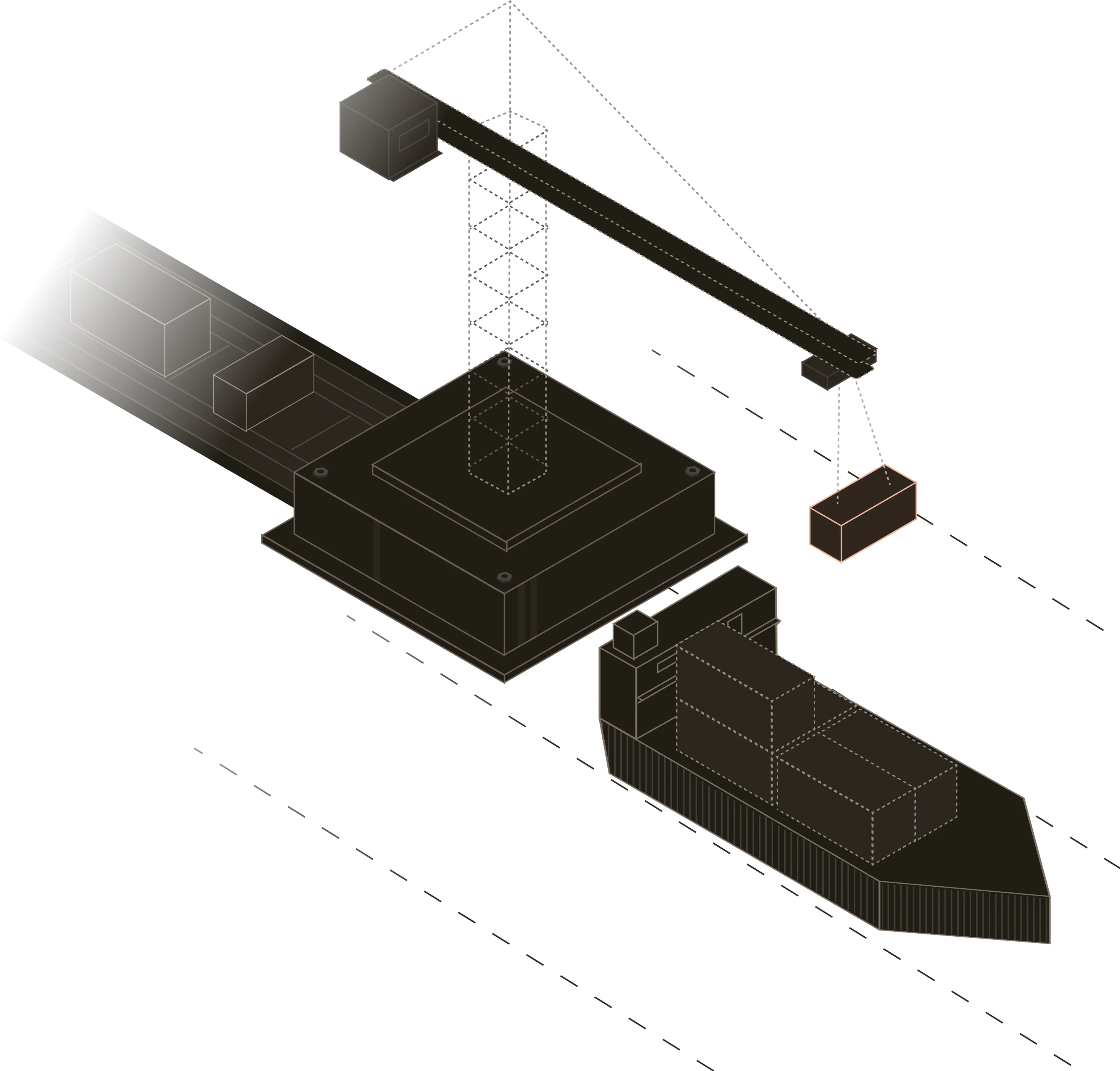
Isometric shipyard crane loading containers onto a cargo ship beside a platform
Runs with the tools you already use.
HOW IT WORKS

Every pull request gets its own environment.

Developers and coding agents both propose changes. Shipyard gives each one an ephemeral environment to run in, so the team sees what it does before it merges.
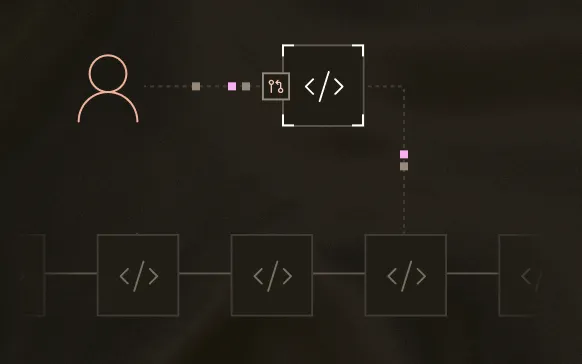
Developer commit flowing through a chain of code stages
01
Change proposed

A developer or a coding agent opens a pull request.
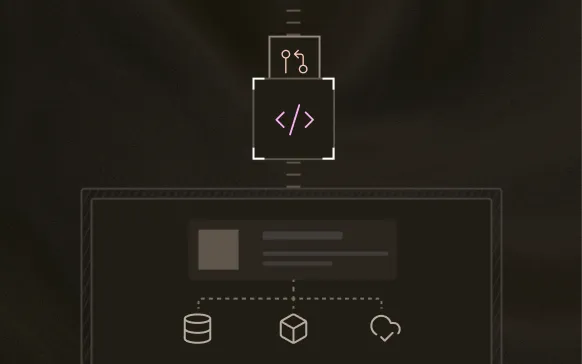
Code change and pull request flowing into an environment with database, container and cloud services
02
Environment built

An ephemeral environment, generated from the application's own definition.
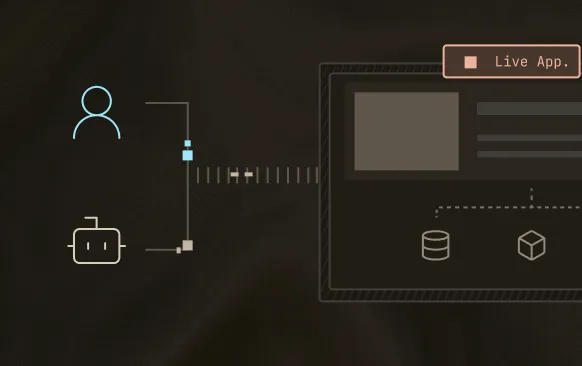
A user and an AI agent both working against a live app environment
03
Change tested

People and agents run it against a live application.
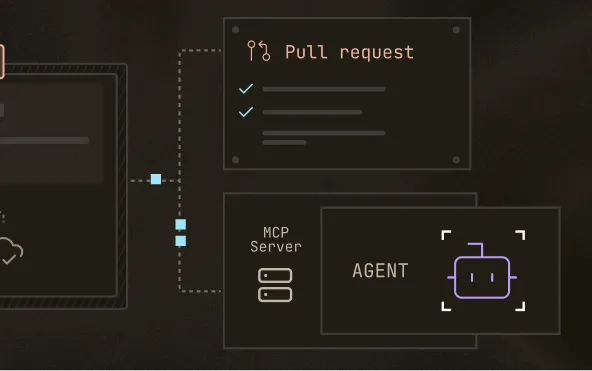
Pull request and coding agent connected to an environment through an MCP server
04
Result read

In the pull request, or by the agent through the MCP server.
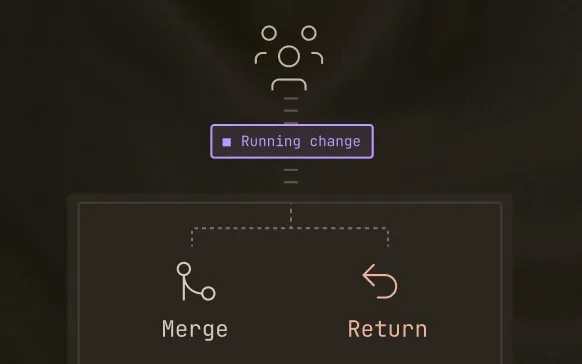
Running change by a team ending in either a merge or a return
05
Merged or sent back

The team decides with the running change in front of them.
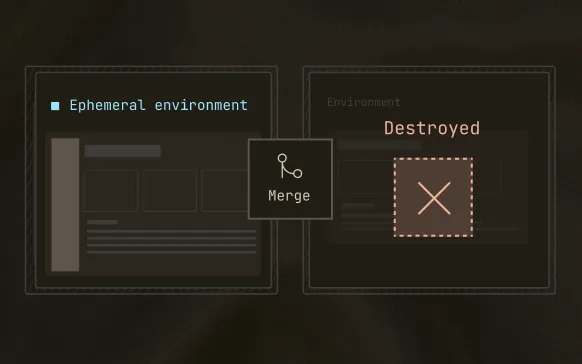
Ephemeral environment merged, then the old environment destroyed
06
Environment destroyed

Torn down on merge. Nothing is
left drifting.

Sent back? The next commit gets a fresh environment.

Create as many environments as you need.

Every branch and pull request gets a full-stack ephemeral environment, built from the application's own definition. Environments scale to zero when idle and are destroyed on merge.

Built from your Docker Compose file
Multi-service apps with health checks and ingress routing
Torn down automatically when the pull request merges
Learn More
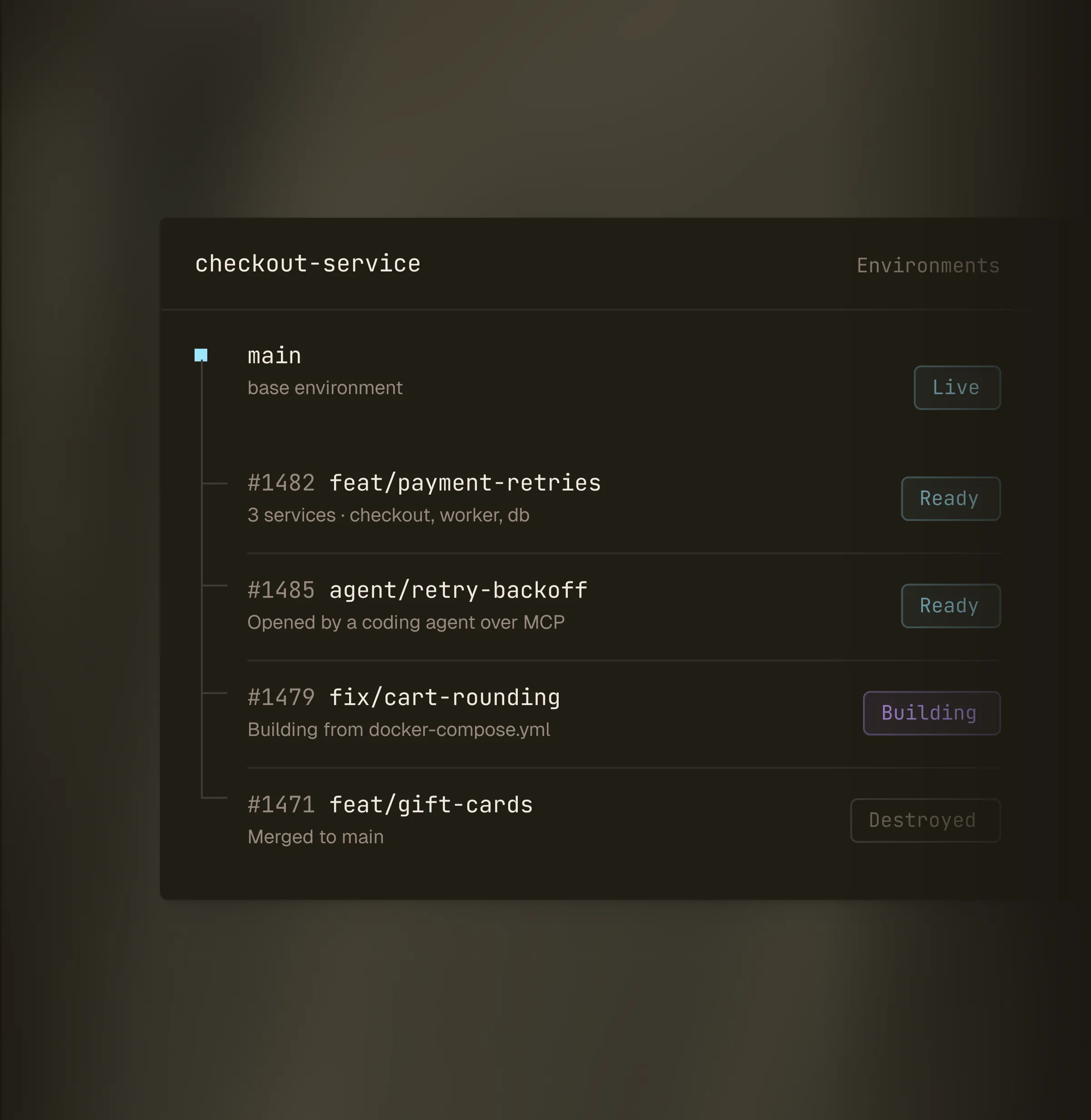
Shipyard environment list for checkout-service: main live, PR environments ready, building or destroyed
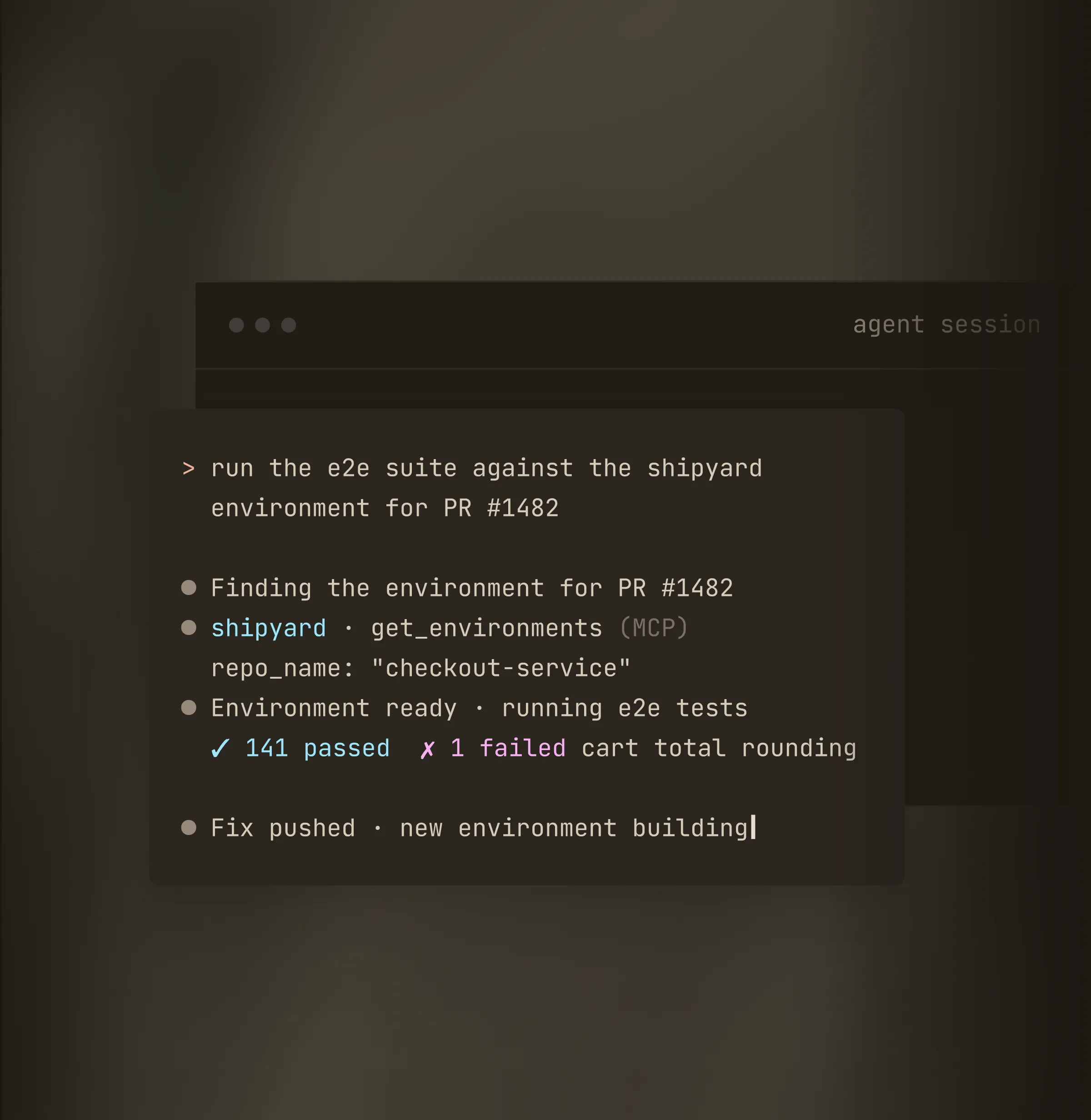
Agent session running the e2e suite against a Shipyard environment for PR #1482: 141 passed, 1 failed, fix pushed

Get fast, lightweight previews.

Push a change and test it against a live environment in the same loop. Developers get feedback in minutes, and coding agents can run the whole cycle on their own.

Push-to-deploy on every commit
Live build logs, pod status and an interactive terminal
Agents create environments and run tests through the MCP server
Learn More

Review every change in a running app.

Reviewers, QA and product each get a shareable link to the pull request's environment, so they can check the change and sign off before it merges.

A shareable environment link on every pull request
UAT and design review without waiting for a staging deploy
Role-based access control and audit logging
Learn More
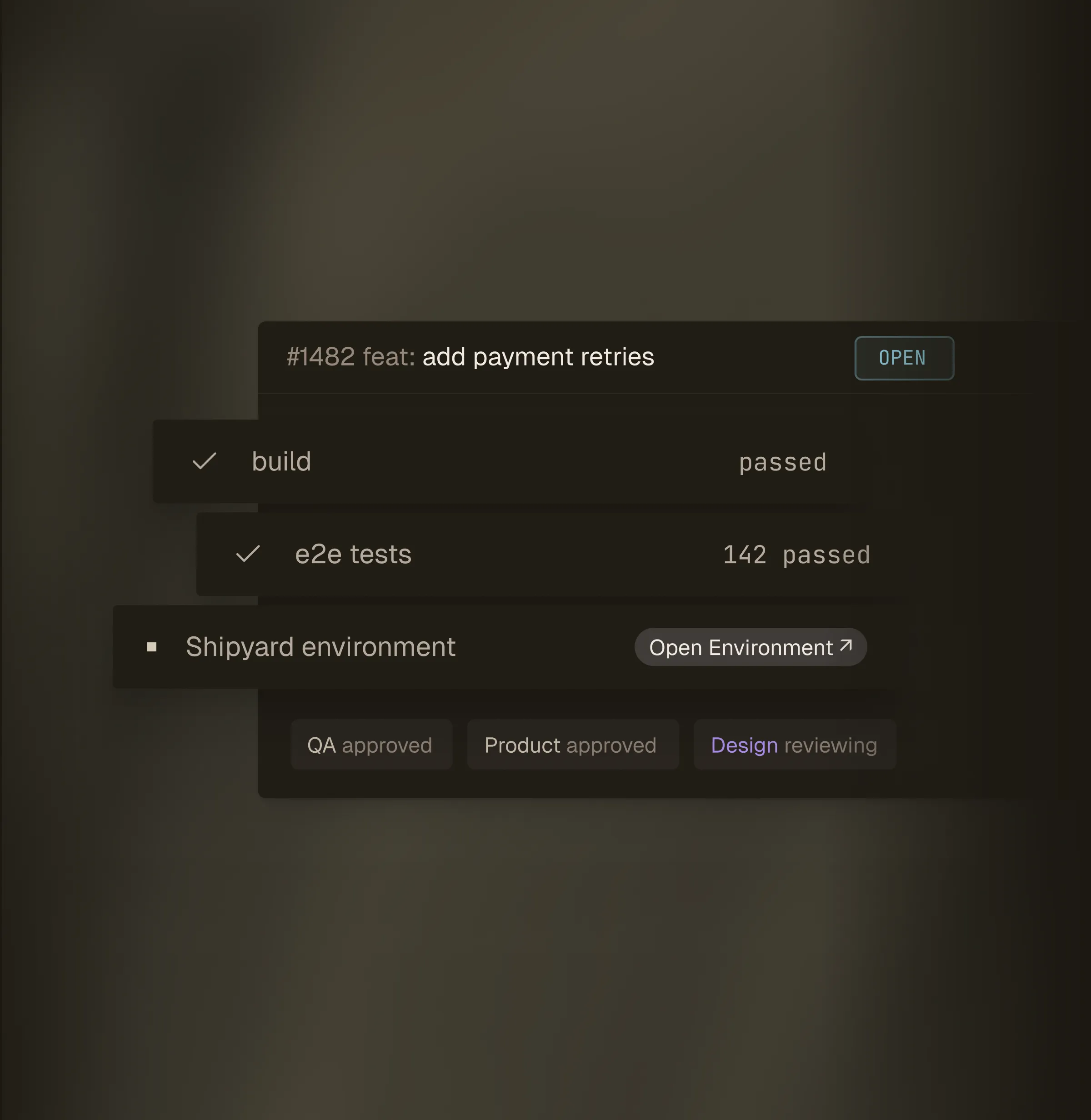
Shipyard pull request card for #1482 with build and e2e tests passed and a Shipyard environment link
USE CASES

Built for every team that touches a change

AI Agents

Give coding agents real infrastructure to test against. They open a pull request, run tests over MCP and iterate before anyone reviews.

Learn More
DevOps Teams

Stop maintaining shared staging. Every pull request gets a full-stack environment your CI/CD can reach through the Shipyard API.

Learn More
E2E Testing

Run your end-to-end suite against a full-stack environment before merge, in parallel, from GitHub Actions or CircleCI.
Learn More
QA Teams

Test features in parallel in isolated environments, instead of waiting for a merge and a staging deploy.

Learn More
Product Teams

Review work in progress from a shareable link, and sign off on UAT and design before release.

Learn More
TESTIMONIAL

Customer testimonial

Healthie logo on an isometric black box
Shipyard gives me back 20–30% of my work week, easily

With Shipyard, I no longer have to juggle release branches, configure multiple staging systems, and coordinate between developers and QA.

John Bachir,
Director of Engineering, Healthie
Read Case Study

How Shipyard accelerates the Autonomous Operations Factory

The agents in the StackGen Autonomous Operations Factory propose changes to infrastructure, pipelines and running services.

Every one of those changes deserves somewhere to prove itself before anyone approves it. Shipyard does that for developers and coding agents today, and it is where we are taking the factory's agents next.

Read the blog
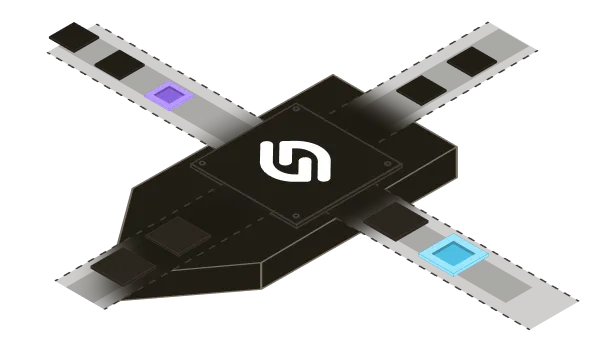
Isometric black StackGen hub on crossing conveyor belts
faq

Frequently Asked Questions

Have another question? Book a demo or visit shipyard.build.

What is Shipyard?
What are ephemeral environments?
How does Shipyard integrate with AI coding agents?
How does Shipyard reduce cloud costs?
Is Shipyard secure?

Ephemeral environments,
on demand.